E-mail
{{EMAIL}}
Phone
{{PHONE}}
Working hours
09:00–21:00
Skip to content
Deep tissue — home and hotel visits

Deep tissue massage at your home or hotel in Barcelona

Slow, layer-by-layer work with deep muscle and fascia. We do not work on “the back” in general; we work on the specific overload — the one that leaves your neck tight by evening and your spine stiff in the morning. I arrive with my own folding table, fresh linens and unscented oil.

  • Visits across Area Metropolitana de Barcelona, as well as hotels and aparthotels — I bring the equipment with me
  • Working pressure 6-7 out of 10: if your breathing stays even, the depth is right
  • A short intake before we start and two or three exercises for your area afterwards
{{YEARS}}
years in practice
{{SESSIONS}}
sessions delivered
{{CLIENTS}}
regular clients

Back view: the trapezius (m. trapezius), latissimus dorsi (m. latissimus dorsi), erector spinae (m. erector spinae) and the gluteal muscles — the layers most of the work runs through.

  • Trapezius (m. trapezius)
  • Deltoid (m. deltoideus)
  • Latissimus dorsi (m. latissimus dorsi)
  • Erector spinae (m. erector spinae)
  • Thoracolumbar fascia (fascia thoracolumbalis)
  • Glutes (mm. glutei)
Area Metropolitana de Barcelona

areas I travel to

09:00–21:00

hours for sessions and visits

70 cm (28 in) table

I bring it with me

{{EDUCATION}}

training and certificates

Therapy only

no intimate services

What deep tissue is

Deep tissue massage: slow, layered and to the point

Classic massage works the surface and general tone. Deep tissue moves downward in layers — to the muscles and fascia that hold an awkward position for eight hours straight.

The difference is not in force but in speed and precision. Fast, strong pressure is met by a protective contraction: you tense up, the therapist pushes harder, and round it goes. Deep tissue works the other way — pressure builds slowly, usually on the exhale, and stays on one spot until the tissue stops resisting. That is why a session is quieter and noticeably slower than most people expect.

The second layer of the work is fascia. The thoracolumbar fascia (fascia thoracolumbalis) ties the latissimus dorsi, the erector spinae and the glutes into a single chain, and a “bad lower back” often turns out to be that chain being pulled from below — from the pelvis and the hamstrings. Hence a simple rule: the place you feel it and the place we work are far from always the same.

Third, specifics instead of general formulas. After eight hours at a laptop it is not the neck that is short but the suboccipitals (mm. suboccipitales) and the pectoralis minor (m. pectoralis minor), which pulls the shoulder forward. And pain beside the spine often comes not from the erectors but from the quadratus lumborum (m. quadratus lumborum, QL) — the muscle that works in side bends and when you sit with your weight tipped onto one hip.

And honestly about the limits: massage will not fix a disc herniation, will not replace a doctor and will not remove your need to move. It takes down excess tone, gives tissue its mobility back and opens a window in which exercise finally starts to work. Regularity does the rest.

  • Slow, layered pressure instead of fast pushing through
  • The 6-7 out of 10 discomfort scale is a reference point, not a demand to endure
  • Work along chains: the lower back is often addressed through the pelvis and hamstrings
  • Every area only with your consent, agreed before we begin
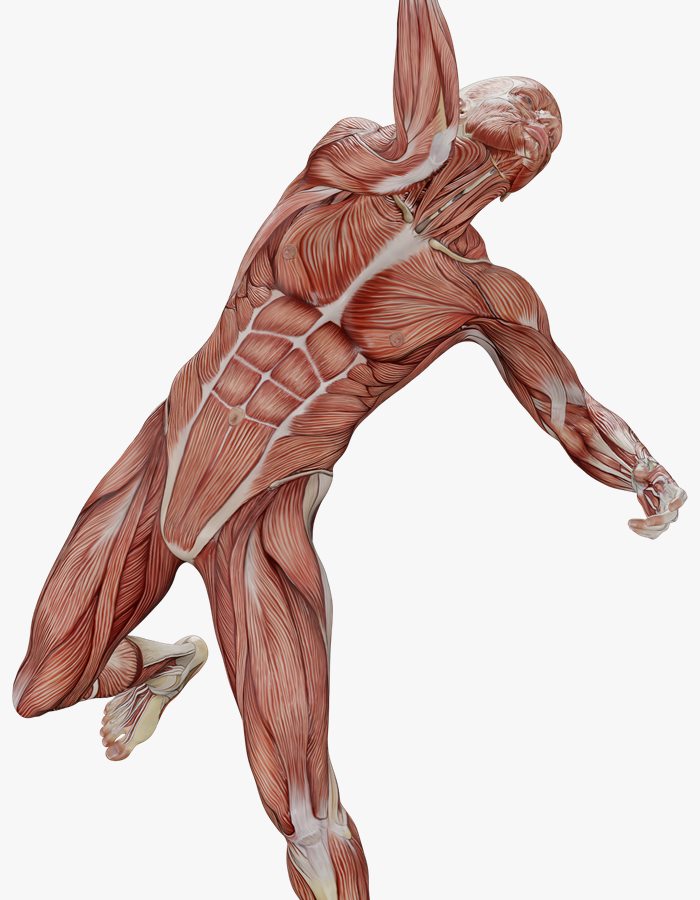
Anatomical 3D render: skinless torso from the front in a twist, vertical frame
Muscles in focus

Trunk rotation: the external oblique (m. obliquus externus abdominis) weaves into the thoracolumbar fascia at the back — this is the front half of the same chain that pulls on the lower back. The serratus anterior (m. serratus anterior) next to it does something else: it holds the shoulder blade against the ribs.

  • External oblique (m. obliquus externus abdominis)
  • Serratus anterior (m. serratus anterior)
  • Rectus abdominis (m. rectus abdominis)
  • Quadriceps (m. quadriceps femoris)
Tissue cross-section

Where the pressure reaches

A cross-section from skin to bone. Pick a technique to see which layer it actually works on, how fast the hand moves and what does not really happen.

Technique
Tissue cross-section under the therapist’s arm A vertical cross-section: skin, subcutaneous tissue with the superficial fascia, a superficial muscle with fibres running along the section, the deep fascia, a deep muscle with fibres running across the section, the periosteum and bone. From above, the therapist’s forearm or elbow presses the tissue down; dashed loops show how deep the pressure reaches and the target layer is outlined. Layer numbers match the legend. 1 2 3 4 5 6
Diagram, not to scale: layer thickness is schematic and varies from area to area. Tempo and the sensation scale are this site’s working guidelines, not measurements; trigger points follow Travell & Simons.
  1. Skin Touch and pressure receptors. This is where massage first “talks” to the nervous system.
  2. Subcutaneous tissue and superficial fascia Fat lobules and a thin connective layer that lets the layers glide over one another.
  3. Superficial muscleOn the way The trapezius or the latissimus, for example. Its fibres run along the section, and long strokes follow them.
  4. Deep fasciaOn the way A dense sheet between muscle layers; in the lower back it is the thoracolumbar fascia over the spinal erectors.
  5. Deep muscleTarget The rhomboids under the trapezius, the erectors under the latissimus. The fibres run in another direction, so the section shows bundles.
  6. Periosteum and boneNot worked A thin, nerve-rich sheath around the bone. Pressure is never aimed here: over bony points the work gets softer, not harder.

Now on the diagram

Deep tissue

Target layer: the deep muscle and its attachments, reached through the superficial layer, one layer at a time

Tempo
One to three centimetres per second; on dense spots the hand is almost still.
Sensation
A working 6-7 out of 10, “hurts good”. Breathing stays even: if you hold your breath, the pressure is already too much.
Goal
Reduce tone and tenderness in a specific area and bring back range of motion.
What does not happen
Nobody “reaches the bone”: the periosteum is not pressed into. And adhesions cannot be “broken up” by hand: tissue yields to slow pressure, not to force.
Services

Six formats — from a deep session to an express for the neck

The core format is deep tissue massage. The other techniques are not “extras” but tools: they come in inside a session, or stand alone when the task is narrow.

60 / 90 / 120 minutes from 55€

The main format of the practice. Slow, layered work with chronic tension in the back, neck and pelvis — at your place or in the studio.

  • Intake and a look at how your shoulders and pelvis sit before any hands-on work
  • Work along the chain, not only at the spot that hurts
  • Pressure follows your breathing: 6-7 out of 10 is the working range
  • We finish with two or three exercises for your area

60 / 90 minutes from 55€

Slow stretching of the fascial layers with almost no oil — for places where the muscle is not so much tight as it has lost its glide against the one next to it.

  • Forearm and palm on long vectors, with no jerking
  • Sits well on the thoracolumbar fascia and on the front line of the shoulder
  • Less pressure, more time under load
  • Often combined with deep tissue in a single session

60 minutes from 55€

Precise work with trigger points — tight knots that refer pain elsewhere: from the upper trapezius into the temple, from the gluteal area down the thigh.

  • The point is found by its referral pattern, not by guesswork
  • Pressure is held until the sensation fades, then movement — to keep the new length
  • The piriformis (m. piriformis) gets separate attention when the complaint runs into the hip
  • This format is worth pairing with homework between sessions

60 / 90 minutes from 85€

For people who run, lift or are building towards a race: recovery after high-volume weeks, the posterior chain and the outside of the thigh.

  • Before a race — short priming work; afterwards — recovery work
  • The iliotibial band (tractus iliotibialis, ITB) is fascia, not muscle: hands cannot “stretch” it, so we work the tensor fasciae latae (m. tensor fasciae latae, TFL) and the vastus lateralis (m. vastus lateralis)
  • Calf and Achilles tendon — carefully, without pressing into the tendon itself
  • A planned session is better two or three days before a race than the night before

30 minutes {{PRICE_EXPRESS}}

A short format for the office neck: upper trapezius, the occipital attachment, the shoulder girdle. People book it at lunch or between meetings.

  • Seated or lying down, without oil — you can go straight back to work
  • A look at how you sit at your desk and at your monitor height
  • Not a substitute for a full session when the pain is chronic
  • A convenient first visit if you are unsure the format suits you

90 minutes 85€

The whole session goes to one region: the erectors, the thoracolumbar fascia, the pelvis and the hamstrings — the chain that most often shows up as “my lower back”.

  • Bending and rotation tests before and after the work
  • Quadratus lumborum and the glutes, not only the strips along the spine
  • No abrupt techniques and no “cracking” — this is massage, not manual therapy
  • Ten minutes of homework a day
How a visit works

Five steps: from your message to your homework

A visit differs from a session at the studio only in logistics. The working protocol is the same.

01
Your message

Write to me on {{WHATSAPP}} or {{TELEGRAM}}, or call {{PHONE}}. Include your district, a time that suits you and, in a couple of words, what is bothering you.

02
A short intake

Before I come I ask how long it has been going on, what makes the pain worse, whether there have been injuries or surgery, and what medication you take. If the picture calls for a doctor, I will say so right away — before any payment and before the visit.

03
I arrive with the table

I bring a folding table 70 cm (28 in) wide, fresh linens, unscented oil and hand sanitizer. I set the workspace up myself in a few minutes — all I need from you is a clear patch of floor and a socket nearby.

04
The session

First a short standing assessment and a couple of mobility tests, then the work itself. You stay in your underwear or comfortable clothes, the body stays covered by a sheet and only the area being worked on is uncovered. I check in about the pressure as we go.

05
Advice and homework

At the end: what to do today (water, warmth, no heavy training), two or three exercises for your area, and an honest answer on whether you need another session and exactly when.

Map of pain

Six areas people come in with most often

Pain rarely lives exactly where you feel it. Below are the areas and muscles that usually turn out to be the cause. A detailed breakdown of each is in the muscle atlas.

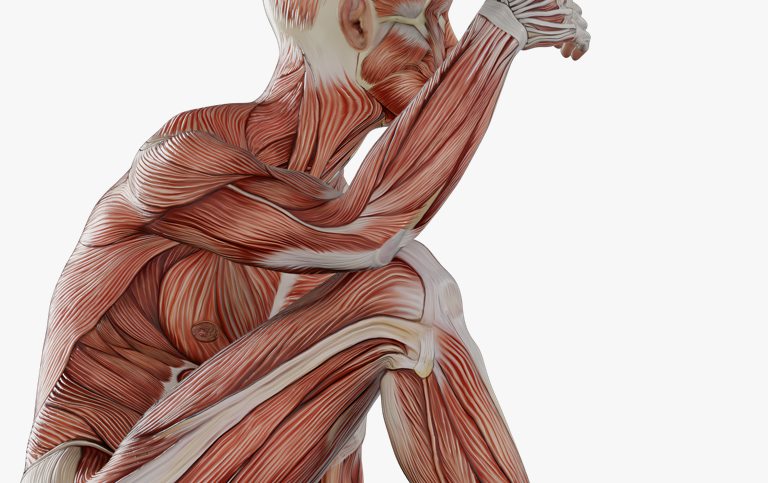
Anatomical 3D render: seated skinless figure hugging the knees, side view
Neck and shoulders

The head drifts forward and the upper trapezius holds it up all working day. We work from the occipital attachment down along the top of the shoulder — towards the clavicle and the acromion, where those fibres attach — and separately with the shoulder girdle, otherwise the neck returns to the same position within a couple of days.

  • upper trapezius (m. trapezius, descending part)
  • deltoid (m. deltoideus)
  • erector spinae in the upper back
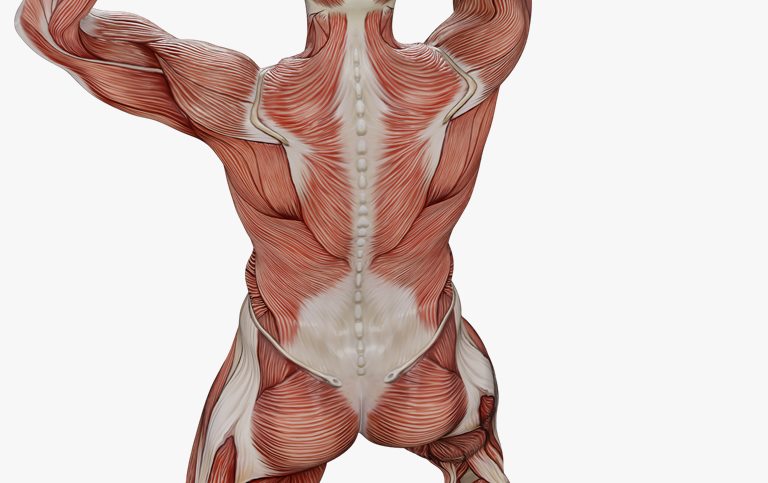
Anatomical 3D render: skinless figure lying in a twist, close-up of the back
Between the shoulder blades and the shoulder girdle

That burning between the shoulder blades is usually not where the trouble is: the blade hangs on a shortened front line while the middle trapezius works in a lengthened position. So we address the back and the front of the shoulder alike.

  • trapezius, middle and lower fibres
  • latissimus dorsi
  • erector spinae
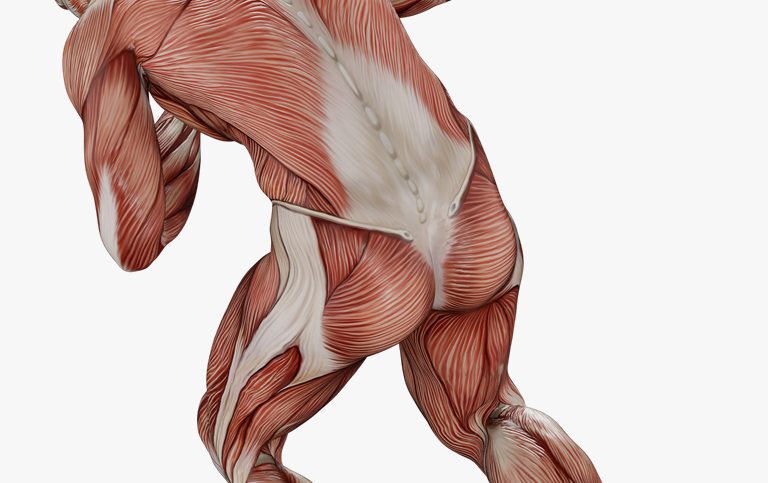
Anatomical 3D render: skinless figure bending forward, rear view, close-up of the lower back
Lower back and thoracolumbar fascia

A forward bend shows how the fascia shares the load between the latissimus above and the glutes below. If the pull comes from below, the lower back pays for it with tone in the erectors — which is why we work the whole chain and not only the strips along the spine.

  • thoracolumbar fascia
  • latissimus dorsi
  • gluteal muscles
  • hamstrings
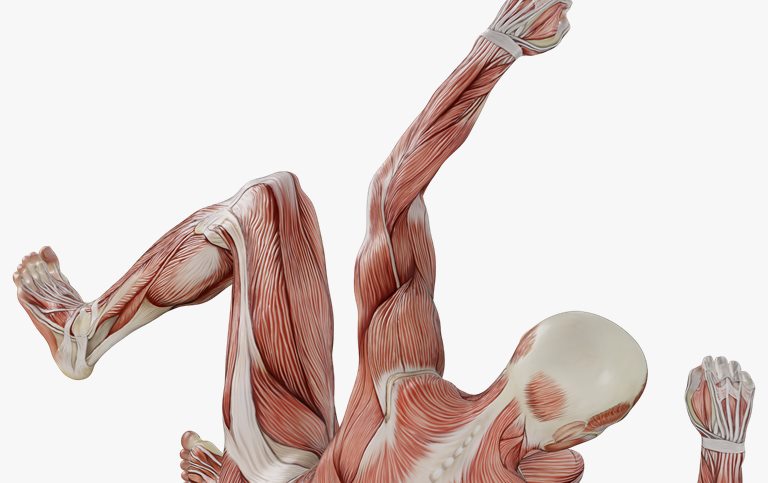
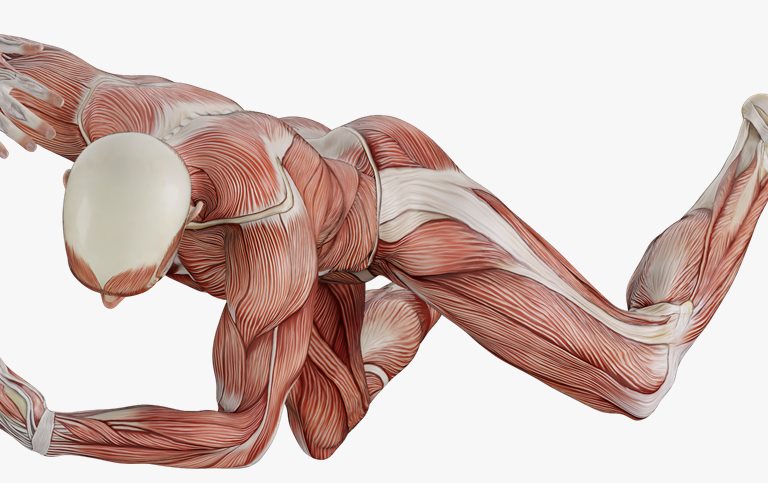
Anatomical 3D render: extended skinless figure lying face down, seen from the back, horizontal frame
Glutes and pelvis

Desk work takes the glutes out of movement: they become stiff and weak at the same time. The referred sensation runs down the thigh and is often mistaken for a “pinched nerve”. Point work plus movement immediately afterwards is what helps here.

  • gluteus maximus (m. gluteus maximus)
  • latissimus dorsi
  • hamstrings
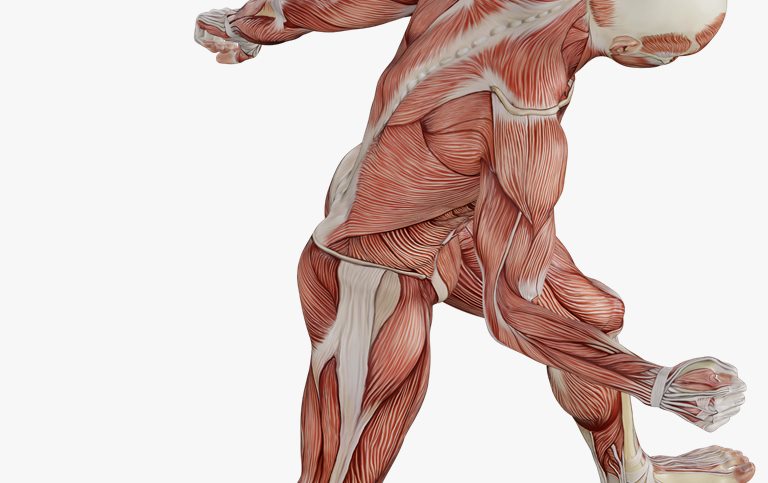
Anatomical 3D render: skinless figure in a running stride, rear three-quarter view
Hamstrings and calf

A running stride reads as a whole: the glute pushes off, the hamstrings decelerate the shin, the calf absorbs the landing. Overload in one link answers straight away in its neighbours, which is why we work the entire chain after long weeks.

  • gluteal muscles
  • hamstrings
  • gastrocnemius (m. gastrocnemius)
  • Achilles tendon
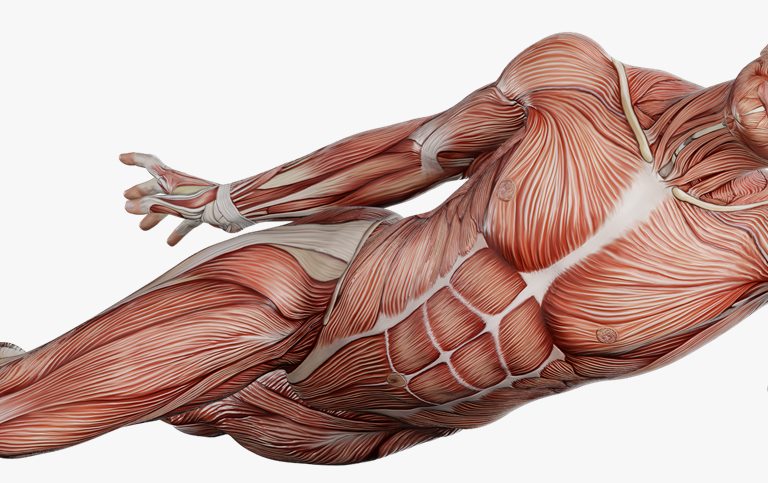
Anatomical 3D render: reclining skinless figure, front view, wide horizontal frame
Chest and the front line

The front line shortens from desk posture and pulls the shoulders inward. While it stays short, the back will return to its old position a day or two after a session — so we address it on equal terms with the back.

  • pectoralis major (m. pectoralis major)
  • serratus anterior
  • rectus abdominis (m. rectus abdominis)
  • obliques
Visits and boundaries

Home and hotel visits: what I bring and what I need from you

Visits are the main format of the practice. Below is the practical side with no surprises, and at the end the part people usually leave unsaid, although saying it in advance is easier for both sides.

There is no need to prepare the apartment or the hotel room: I come with my own equipment. Some space and a socket nearby are enough.

What I bring with me

  • A folding massage table 70 cm (28 in) wide — stable, height-adjustable, with a face rest
  • A fresh set of linens for every client: sheets, a blanket and a disposable face cover
  • Unscented oil or balm; if you react to certain ingredients, tell me in advance
  • Hand sanitizer and a product for wiping the table down between clients
  • A bolster for the ankles and a cushion for the knees — for face-down and face-up positions

What I need from you

  • A clear patch of floor about 2 × 2.5 m — any room will do
  • A socket nearby: it is needed for the linen warmer and for the lamp if we work in the evening
  • A warm room without a draught — during a session the body cools faster than usual
  • Somewhere to wash my hands and, if possible, a shower for you before the session
  • Quiet while we work: pets and children are better occupied in another room

Hotels, aparthotels and late hours

I work in hotel rooms: the table goes up next to the bed and I come in through reception, calmly and without extra explanations. Include the hotel name and room number in your message. A hotel visit is charged separately (100€), late hours at the night rate ({{PRICE_NIGHT}}). Regular working hours: 09:00–21:00.

FormatWhat I take care ofWhat I need from you
Apartment or houseTable, linens, oil, disinfectionFloor space 2 × 2.5 m and a socket nearby
Hotel or aparthotelArrival with the table, a quiet entrance through reception, quiet workHotel name and room number in your message
Studio — Balmes 200Fixed table, shower and equipment on siteCome a little early so we do not start in a rush
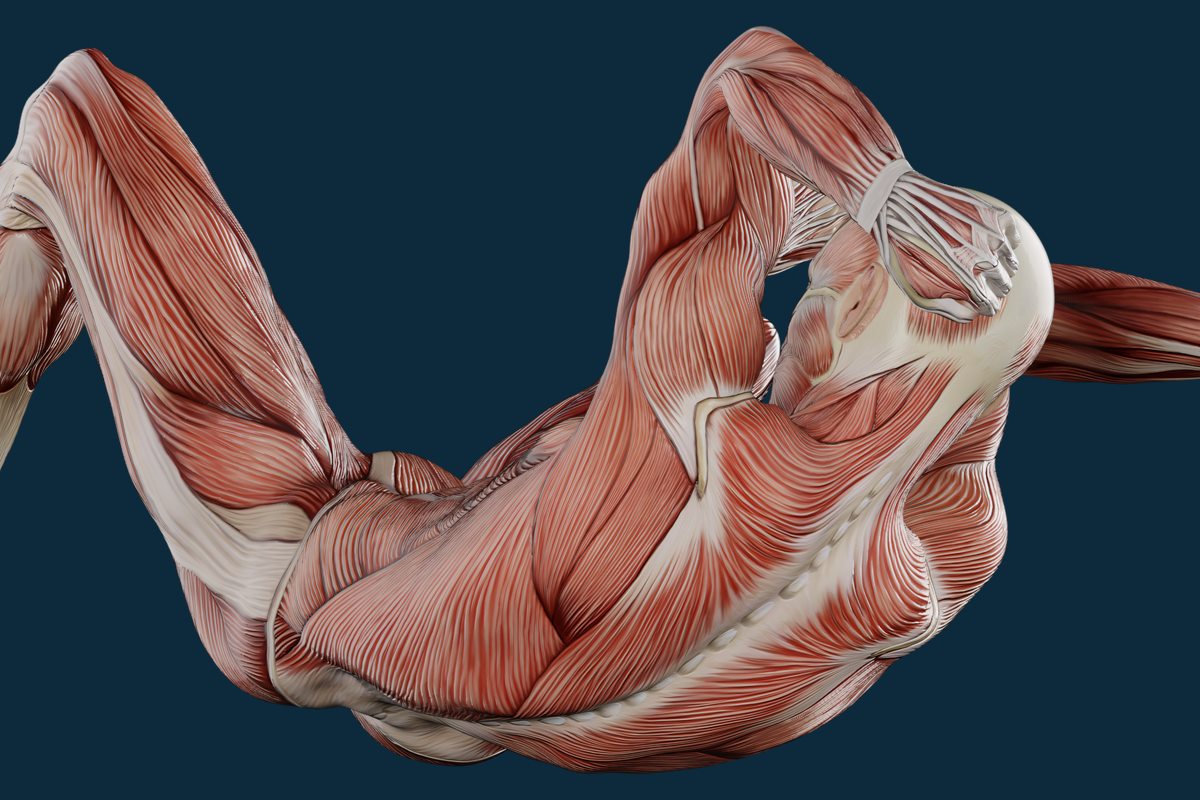
Anatomical 3D render: curled-up skinless figure with the legs drawn in, horizontal frame
Muscles in focus

On the table: the back, the glutes and the hamstrings are worked one after another — the order follows your complaint, not a habitual routine.

  • Erector spinae (m. erector spinae)
  • Glutes (mm. glutei)
  • Hamstrings (mm. ischiocrurales)
  • Gastrocnemius (m. gastrocnemius)

Ethics and boundaries

Mobile massage is sometimes confused with something else, so let me put it plainly and calmly: I provide strictly therapeutic massage. Requests of any other nature are not open for discussion — in that case the session ends and is charged in full. This is not about distrust, it is about clear rules that save both sides time.

  • You stay in your underwear or comfortable clothes; the body is covered by a sheet and only the area being worked on is uncovered
  • Every new area is agreed before we begin; the gluteal area and the front of the thigh only with separate consent and through the sheet
  • Either side can stop the session at any moment, without giving a reason
  • What is said and your personal data stay between us — see the privacy policy

Massage is not medical care

I do not make diagnoses and I do not prescribe anything. Acute pain, a fresh injury, numbness, weakness in an arm or a leg, a sudden seizing up with loss of sensation — these are reasons to see a doctor first and bring massage in afterwards. The full list of contraindications is in the questions section.

If you can breathe, the pressure is right. If you are holding your breath and pressing into the table, the work is no longer with the muscle but against it.

Ale, Hondo Massage
Prices

Transparent pricing: session, travel and packages

The price depends on the length, not on the technique: deep tissue, myofascial release and trigger point work all fit inside one session, in whatever proportion the task calls for. Only travel is counted separately.

60-minute session

One or two areas and a precise task: neck with the shoulder girdle, or lower back with the pelvis.

55€

per session
  • Intake and short mobility tests
  • Work along a single chain
  • Advice for the next twenty-four hours
  • A good format for a maintenance visit

90-minute session

The best format for a first visit: there is time for the whole back and for the front line as well.

85€

per session
  • The full posterior chain: from the neck to the calf
  • Trigger points held properly, without rushing
  • Work with fascia, not only with muscle
  • Homework tailored to your area
  • This is the option most people choose

120-minute session

For long-standing cases: chronic overload, race preparation, recovery after a high-volume week.

105€

per session
  • Back, pelvis and legs in one session
  • The front line and the chest
  • A detailed look at posture and at how you sit at your desk
  • A plan for a course of sessions, if one is genuinely needed
Travel within the districts 100€ Depends on the district: Area Metropolitana de Barcelona. I name the exact amount when I reply to your message, before the visit.
Hotel visit 100€ Hotels and aparthotels in Barcelona. Include the name and the room number in your message.
Night rate {{PRICE_NIGHT}} For sessions outside 09:00–21:00 — by arrangement and if a slot is free.
Package of 5 sessions 250€ For a course of work on one area. Validity and rescheduling are agreed at purchase.
Package of 10 sessions 450€ The long distance: chronic overload, or support through a training cycle.
Session for two 140€ Two people one after another at the same address, one trip. I cannot work on both at once — there is one therapist.
Express, neck and shoulders {{PRICE_EXPRESS}} 30 minutes, no oil: in the studio or as an addition to a main visit.

The travel fee is named before I set off — there are never extra charges on the spot. Payment after the session, in cash or by transfer. Please tell me about rescheduling in advance: the earlier you do, the easier the day is to rearrange. Full terms are on the pricing page.

Reviews

What people say after their sessions

Sample reviews — replace them with real ones

Desk job and a neck that never lets go. In the first session it turned out the problem was not the neck but the shoulders and the upper back. The pressure is strong, but you can still breathe — and that, as it turns out, is the key difference from everything I had tried before.

A., 34
/
developer

I was building up to a half marathon and my hamstrings seized up. We worked the chain from the glutes down to the calf and I finally understood why it was pulling on the left. I made it to the start line without that wooden-leg feeling.

M., 29
/
recreational running

I booked a home visit after moving house: my back had had enough of boxes. He came with his own table and set everything up himself, quickly. I did not have to prepare a thing — the format works perfectly.

E., 41
/
marketing manager

I live in a hotel for work and booked an evening slot. Clear messages, arrived on time, worked quietly. Worth noting separately that the boundaries were set out straight away and calmly — for a mobile format that matters.

D., 38
/
on a business trip

My lower back had been aching for almost a year. I was told honestly that one visit would not solve it and advised to see a doctor first. After a course of sessions and the home exercises, bending down became noticeably easier.

I., 46
/
accountant

Bench press, deadlift and permanently tight traps — I took all that for normal. This was the first time anyone explained what was actually going on and why stretching alone had not helped. The next day there was mild soreness — exactly as I had been warned.

K., 31
/
strength training
Questions

Common questions before a first session

If your question is not here, write to me on {{WHATSAPP}} or {{TELEGRAM}} and I will answer before you book. Everything else is covered in the full section.

It is noticeable, but not unbearable. The working range is 6-7 out of 10 on the discomfort scale: the “yes, that is exactly it” feeling, where you breathe calmly and do not clench your fists. Anything above that is counterproductive: the muscle answers with a protective contraction and we simply do not get any deeper. I ask about the pressure as we go, and it can be eased at any moment.
In speed, depth and precision. Classic massage moves faster and stays nearer the surface; its job is general tone and relaxation. Deep tissue goes slowly and layer by layer to a specific overloaded muscle or fascia, and it almost always includes work along the chain: the lower back is addressed through the pelvis and the hamstrings. There is a detailed comparison in the article on the difference between the techniques.
It depends on how many years the situation took to build up. People usually notice the difference in mobility after the very first session, but if an area has been bothering you for months, one visit will not rewrite it. The typical scenario is several sessions 7-10 days apart, then a maintenance visit roughly once a month. I suggest a plan after the first session, when it is clear how the tissue responds to the work.

A clear patch of floor about 2 × 2.5 m, a socket nearby and a warm room without a draught. The 70 cm (28 in) table, fresh linens, unscented oil and sanitizer I bring with me. A shower before the session if possible; it is better not to eat a heavy meal in the hour or so before we start. More detail is on the page about visits.
Yes, I travel to hotels and aparthotels, and late hours are charged at the night rate. The format is exactly the same as in the studio: strictly therapeutic massage, work under a sheet, only the working area uncovered, every new area with your consent. Requests of any other nature are not open for discussion, and either side can end the session.
A session is not carried out with fever or a respiratory infection, acute inflammation, thrombosis, thrombophlebitis or pronounced varicose veins in the working area, fresh injuries and fractures, skin infections in the working area, uncontrolled high blood pressure, while taking anticoagulants, or under the influence of alcohol. With a cancer diagnosis — only in agreement with your treating doctor. Pregnancy calls for a specialist in prenatal massage; that is a separate qualification. If you are unsure, write in advance: sometimes changing the area or the format is enough, and sometimes the right answer is to see a doctor first.
Explainers

What to read before a first session

Short pieces on how overload builds up and what to do about it between sessions.

Why your back hurts when you sit for eight hours

Lower back pain by the end of the day rarely begins in the lower back. The mechanics of a seated day: iliopsoas, quadratus lumborum, the glutes, the thoracic spine and the suboccipitals.

2026-06-18
9 min
Deep tissue or classic massage: how to choose

How deep tissue massage differs from classic work in depth, pace and purpose, when each of them is the better fit, and why “more painful” does not mean “more effective”.

2026-07-02
9 min
Trigger points and referred pain: why it hurts elsewhere

A temple aching from the neck, “sciatica” coming from a glute: how trigger points refer pain, and where the method stops.
2026-07-21
9 min
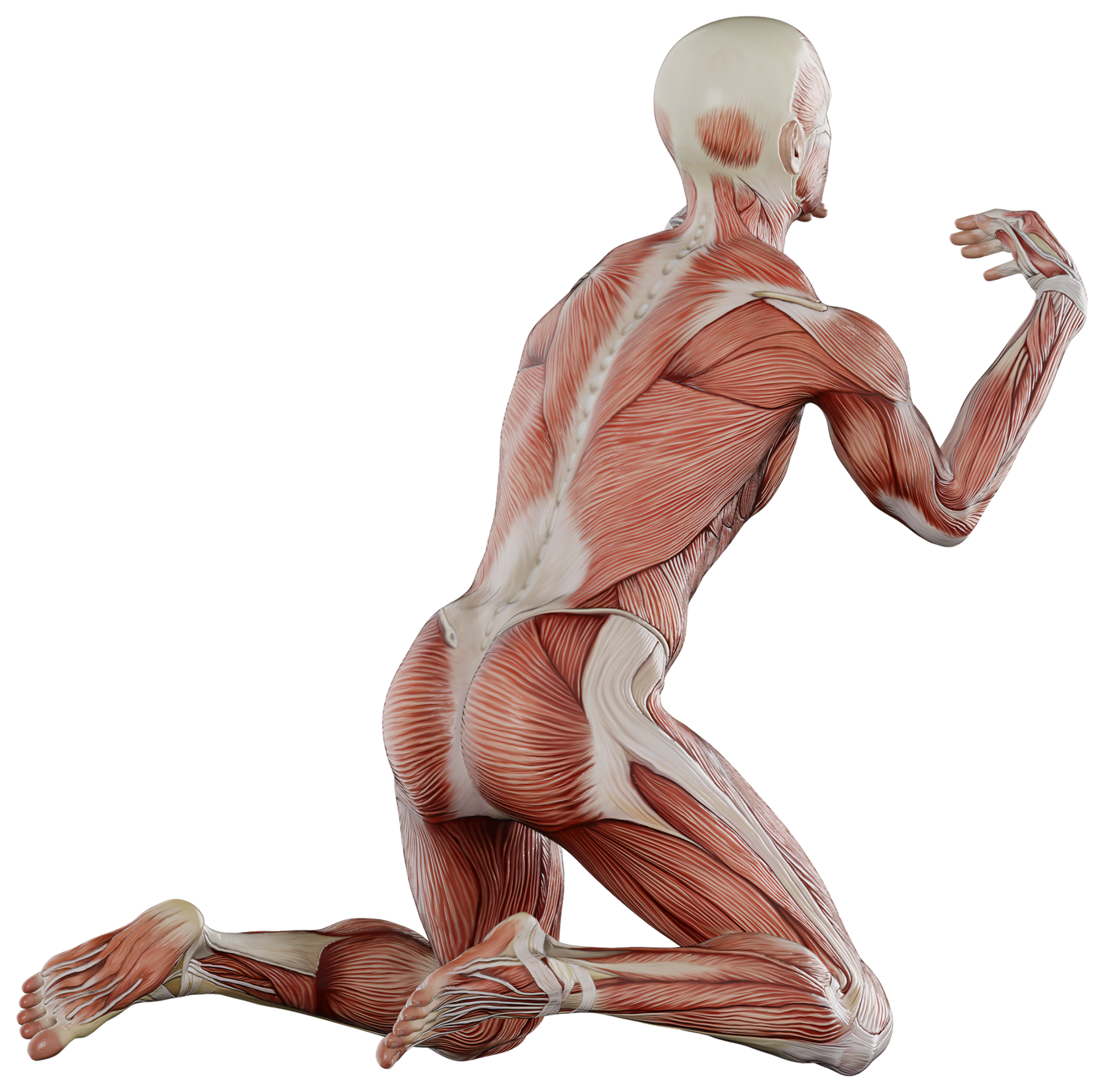
Anatomical 3D render: skinless figure on one knee, torso rotated, rear view

Rotating the torso puts the latissimus dorsi under tension, and kneeling on one leg loads the iliotibial band: a working position in which the layers of the back separate under pressure. Trapezius (m. trapezius) · Deltoid (m. deltoideus) · Latissimus dorsi (m. latissimus dorsi) · Erector spinae (m. erector spinae)

Book a session with a visit to you

Write to me on {{WHATSAPP}} or {{TELEGRAM}}, call {{PHONE}} or send an email to {{EMAIL}}. In reply I will check a couple of details about your complaint, name the travel fee for your district and offer the nearest free slot. Studio — Balmes 200, working hours — 09:00–21:00.
Call WhatsApp Book